
Could Your Feed Yourself on Just $6 a Day?
That is the reality for nearly 70,000 Montgomery County residents who rely on the Supplemental Nutrition Assistance Program (SNAP) to put food on the table. From March 18-20, the Montgomery County Food Council, Manna Food Center, Maryland Hunger Solutions, and the Food Research and Action Center (FRAC) hosted the 2025 SNAP Challenge, inviting participants to experience firsthand the challenges of eating on a SNAP budget. This initiative aimed to foster awareness of the program’s importance and the struggles faced by low-income individuals and families.
Thank you to the dedicated members of our Board, Council, and staff who participated in this year’s challenge.
Reflections from the Challenge

The SNAP Challenge was an eye-opening experience for many participants. Below are reflections from two individuals who documented their experiences throughout the three-day challenge.
Diary Entry from Emma, Food Council Member:
Thoughts & Takeaways:
After three days of the SNAP challenge – trying to eat on $6 or less per day – I have a deeper understanding of the realities of SNAP recipients. I ate on less than $18 over three days, but it was incredibly challenging. Instead of going to the grocery store or kitchen and picking out exactly what I wanted to eat, I had to pause and budget. I found myself doing this multiple times throughout the day when thinking about what I could make for dinner or if I had enough in the budget to have a snack or something sweet. I didn’t have enough money for anything “extra” like spices, organic products, or drinks besides coffee and water. Eating out was definitely out of the question! The thought of paying $6 for a latte was outrageous after having to make that same amount last for three filling and nutritious meals. I was also thankful that I’m vegetarian…the most expensive item I ate was plant-based “chicken” nuggets. I can’t imagine how difficult it is to include meat in this budget. SNAP recipients deserve to eat with dignity; $6 per day is dehumanizing.
Tuesday: $4.60
- Breakfast was a blueberry muffin and coffee with milk.
- Lunch – I got lucky and had a free lunch provided by work during a training. The salad, fresh fruit, and quinoa that I ate definitely would have put me over budget.
- Dinner was waffle fries and plant-based “chicken” nuggets.
Wednesday: $6.03
- Breakfast was a bagel with cream cheese and coffee with milk.
- Lunch was chickpeas mixed with pepper, onion, and an egg.
- Dinner was rice noodles, pepper, onion, bok choy, and broccoli.
Thursday: $6.23
- Breakfast was a bagel with cream cheese and coffee with milk.
- Lunch was leftovers from dinner (rice noodles, pepper, onion, bok choy, and broccoli).
- Dinner was frozen pizza.
Diary Entry from Lorien, MCFC Staff Member:
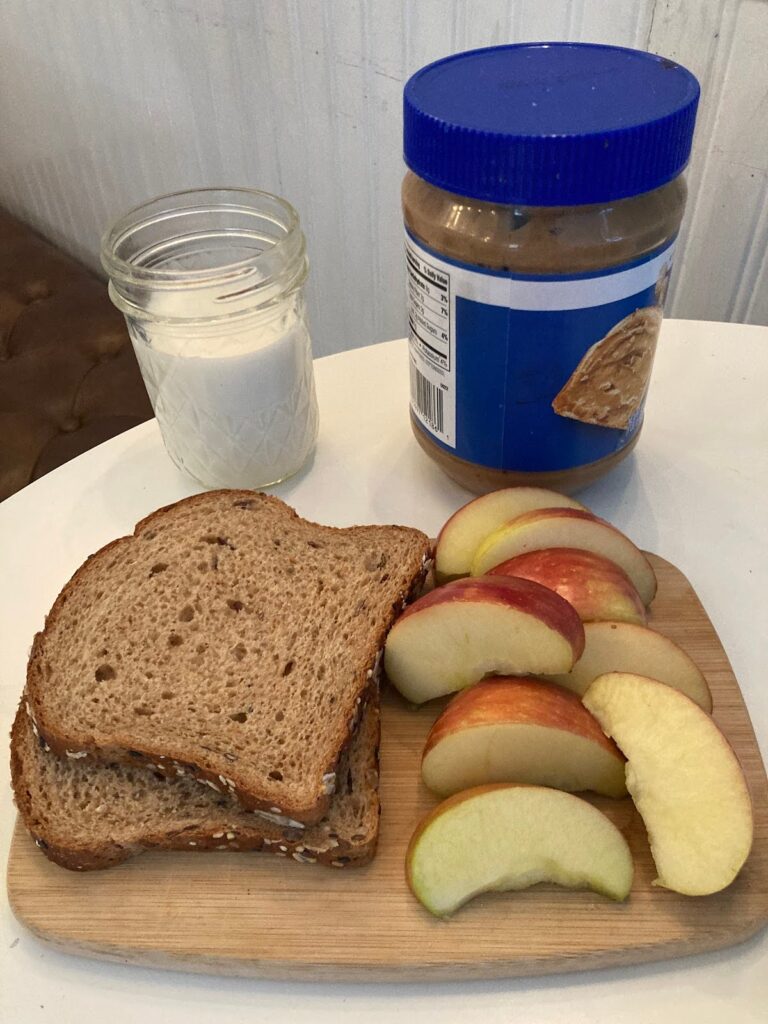 Just this snack alone cost $1.11 for peanut butter toast on whole wheat, apple, and milk. But when my daughter asked for milk, I thought, “I am not sure we can affordit!
Although I had to hunt for it, I found what I was looking for at the dollar store… healthy, natural options to pack a school lunch.
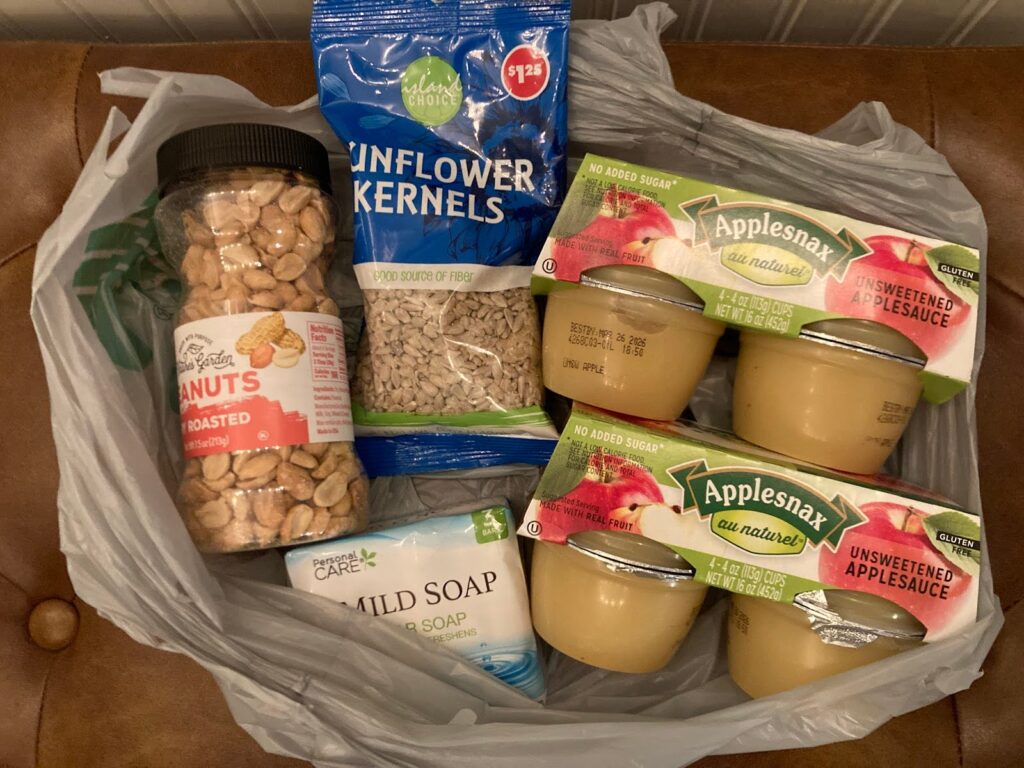
Day one of the snap challenge: two adults and one eight year-old have been fed on $12 today. I avoided cooking anything elaborate, because I recall how in the past, as a single mom on assistance, I had so little extra time for things like cooking. I’m not sure how happy my husband is with this, since I don’t think he ate enough today. Also, I mainly ate what my daughter had left on the plate. When the healthy, planned meal is not enough to fill you up, it’s so hard not to want to snack on high carb or high sugar foods.
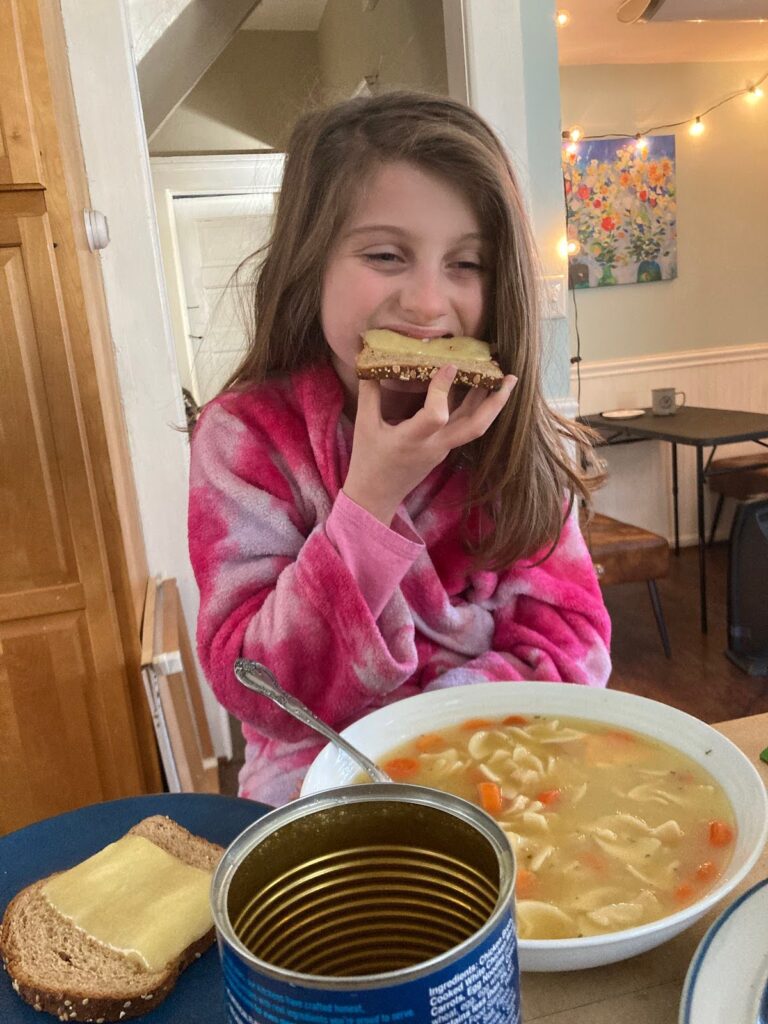
Dinner was canned chicken noodle soup and cheese toast, the ingredients for which I found on mega sale at a discount store. What’s missing here is fruits andvegetables, but we followed up with applesauce and clementines as dessert. While this was more than enough for an eight-year-old, this did not seem like enough for the adults, since we found ourselves snacking right before bedtime.
Day Two
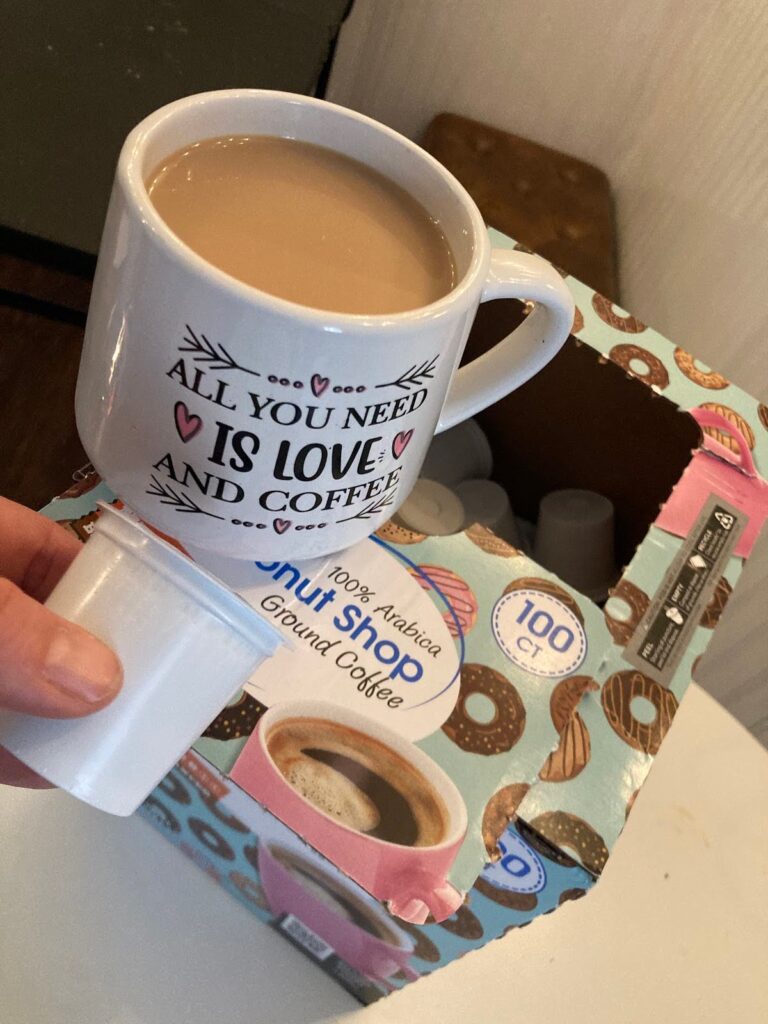 We love our coffee, but it can get expensive. I was happy when I realized that each cup of coffee cost 25 cents! Then I realized it was because I had the luxury to spend $25 on the bulk purchase of 100 K-cups (not to mention the money for a K-cup machine!), which I would not have done while on SNAP.
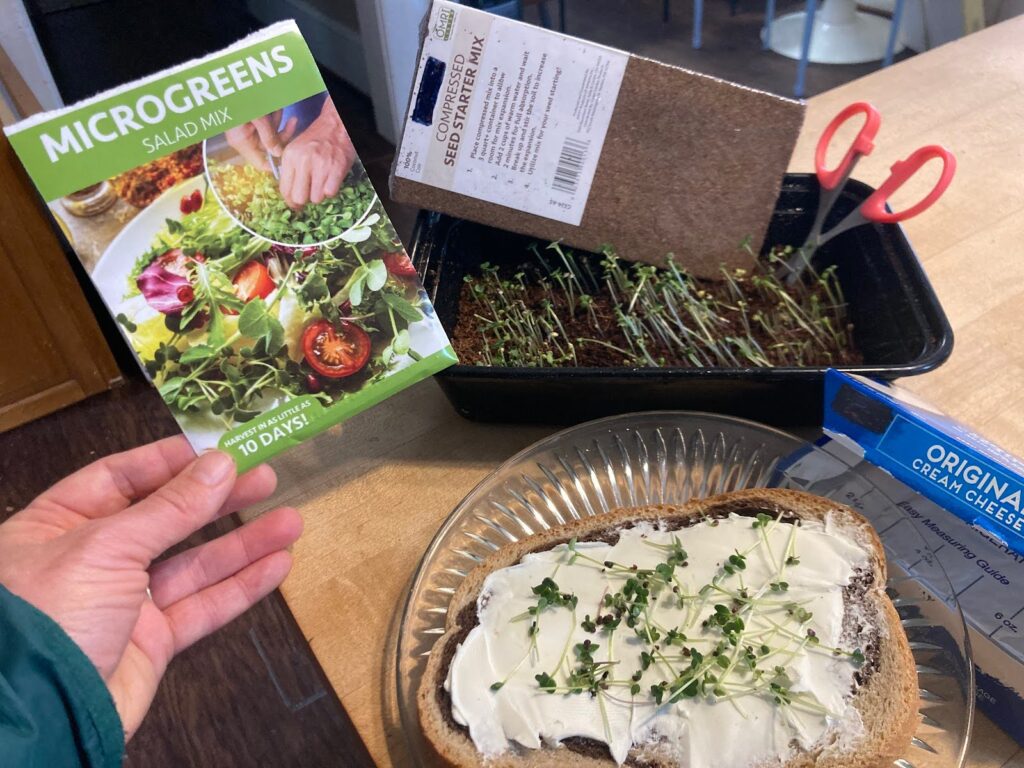 SNAP can be used to buy seeds, as well. At the dollar store, I found this packet of microgreen seeds, and coconut husk seed starter, for $2.50. This lasts for months, providing a weekly harvest of nutritious and delicious micro green topping (here, paired with generic cream cheese and discount bread). Plus, the microgreens are super pretty in a sunny windowsill! This healthy lunch item costs approx. 49 cents.
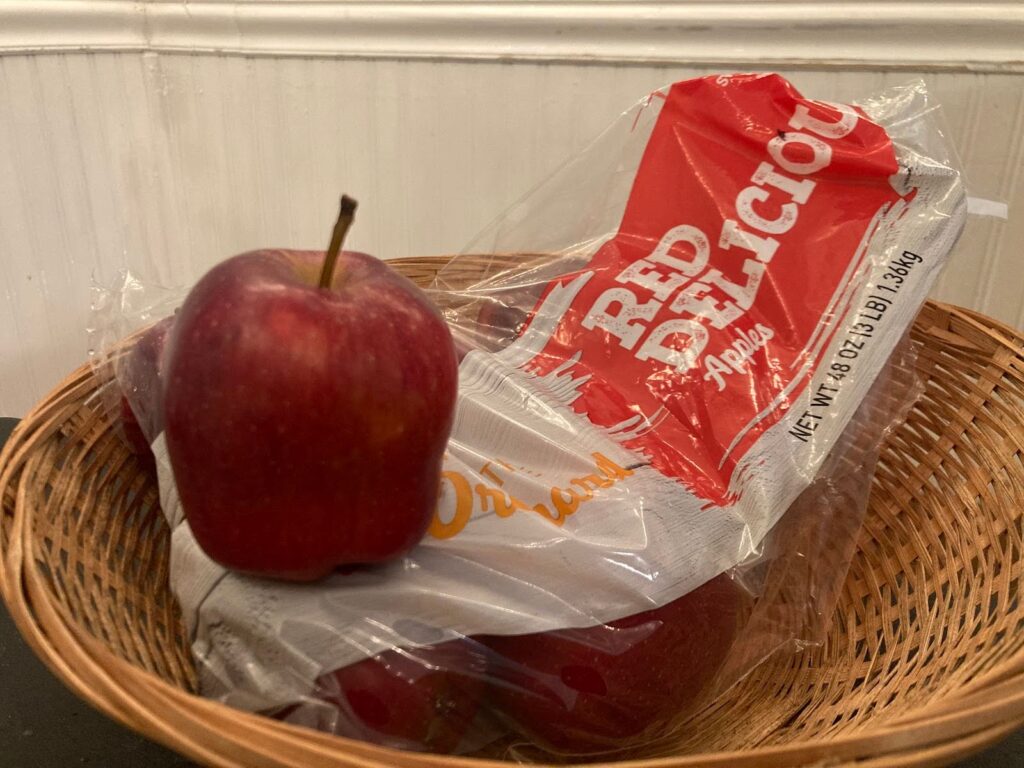 Apples are a crowd pleaser, and a great way for kids to get fresh fruits and vegetables in their diet. On snap, it feels like a lot to spend five whole dollars on a bag of apples from the grocery store, and each apple is 50 cents, which is pretty steep. However, it’s even pricier at the farmers market. With cheaper mass-produced options at the grocery store, it makes it very hard to choose to buy local produce, and support our local farms. But by doing so, we keep our dollars local and therefore community more prosperous overall.
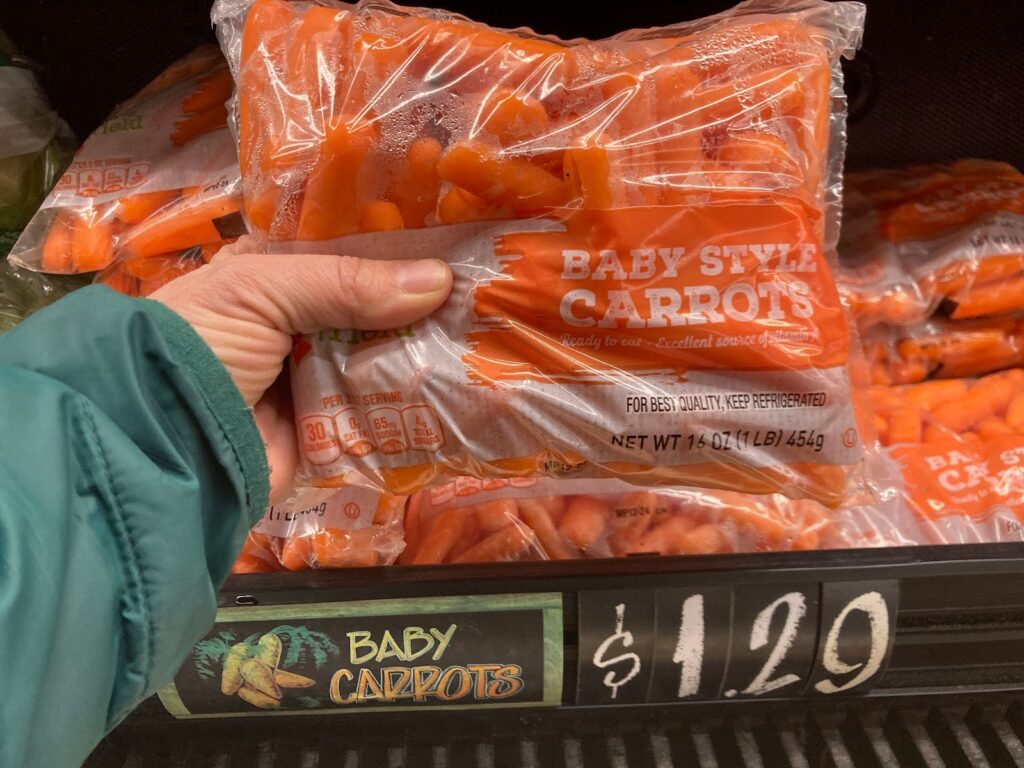 At the full grocery store, the hunt is on for cheap fruits and vegetables that a second grader will eat. Although it’s a little bit more expensive to buy the baby cut carrots, my daughter won’t eat the whole, large carrots. In this bag, each serving of carrots will be roughly 26 cents, but at least she will eat these!
End of day two, and our total for today is $16.76, for myself, my husband, and my 8yo daughter. The hotdogs were the expensive kind for dinner, the only kind my husband can eat, “kosher all-beef.” I felt like my side salad at lunch was a splurge, but the meat at dinner was still easily the most expensive item. Between the three of us, we ate eight hotdogs using whole wheat bread buns. Eight is pretty excessive! We were just very hungry after eating light through the day. The ice cream at the end of the day was also a splurge, but we got the generic brand, which was on sale, and didn’t have high fructose corn syrup in it.
Day 3
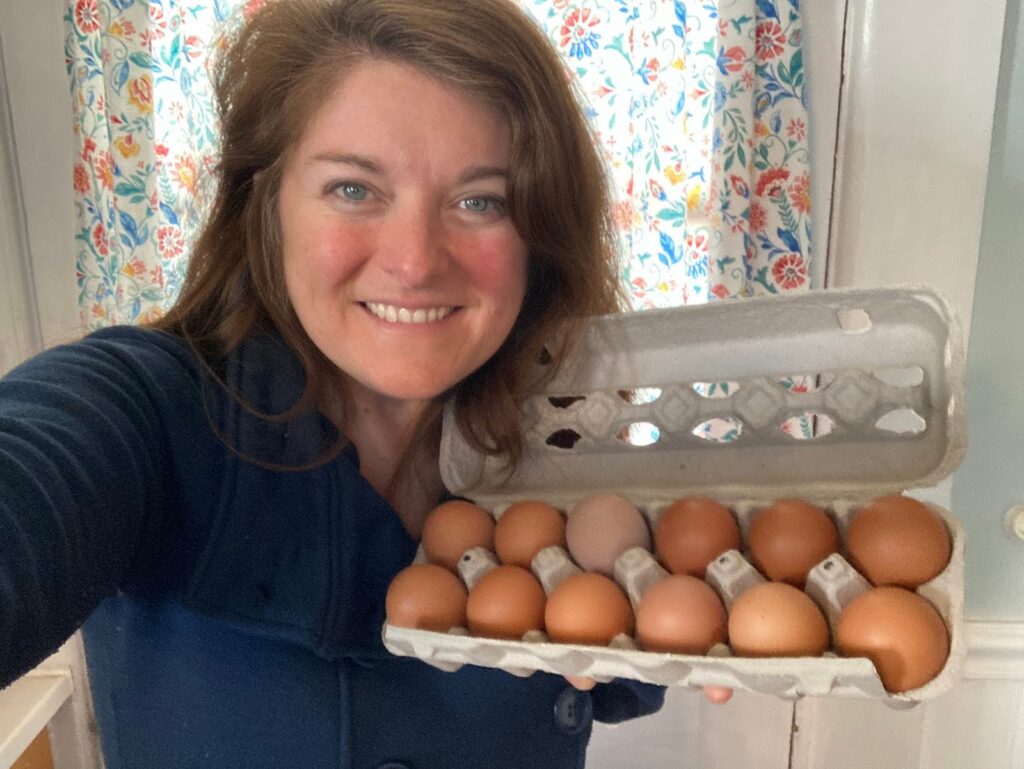 As egg prices rise, I cherish these eggs from my friend and local farmer, Laurie Savage of Brown Cow Creamery. She charged $8/doz, so I spent $4 to prep six of these eggs. I ate two for breakfast with toast, and made hard boiled eggs for my second grader and I to enjoy as an afterschool snack. Although I could’ve gotten cheaper eggs, I feel good about supporting a local farm. Eggs are selling out at the grocery store and we need our local farms – and their eggs – to be there when we need them!
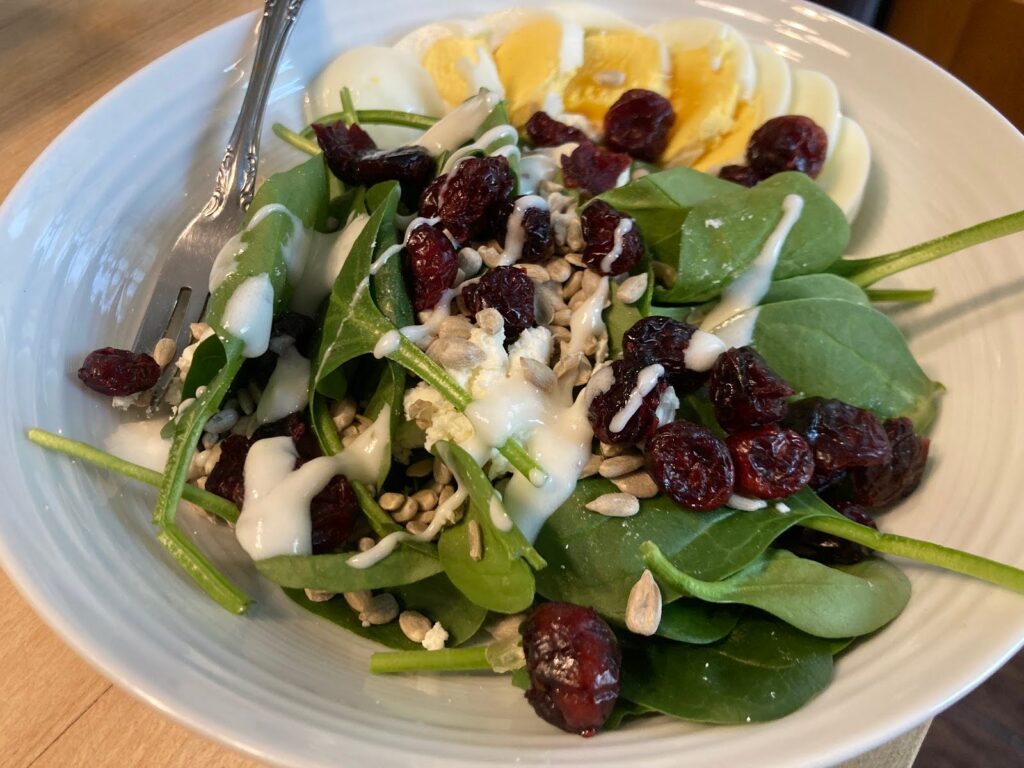 My husband and I have the luxury of fixing our lunches at home, since we both work remotely. Using the cheapest ingredients we had acquired at the dollar store and the grocery store, we fixed nice hearty spinach salads, but they were expensive, totaling $4.35 for two salads. I also had a hard boiled egg on the side, which I acquired at a local farm. Although I feel great after eating a nice healthy salad, we now only have $7.50 or so for dinner, and I know dinner has to be filling after such a light lunch.
The SNAP Challenge is just a glimpse into the reality faced by so many in our community. As we reflect on this experience, we urge policymakers, organizations, and community members to advocate for stronger food assistance programs and equitable food policies. Thank you to our council members and staff that participated in this impactful initiative. Send photos, videos, receipts, and anything that documents your experience taking the SNAP Challenge to SNAPChallenge@frac.org. Share your experience with your local media, social circles, and elected officials so that they can work toward creating a stronger SNAP program. Speak to your experience at a city council meeting. Join the FRAC Action Network to connect directly with your Members of Congress and urge them to protect and strengthen SNAP.
Published on: Mar 24, 2025